

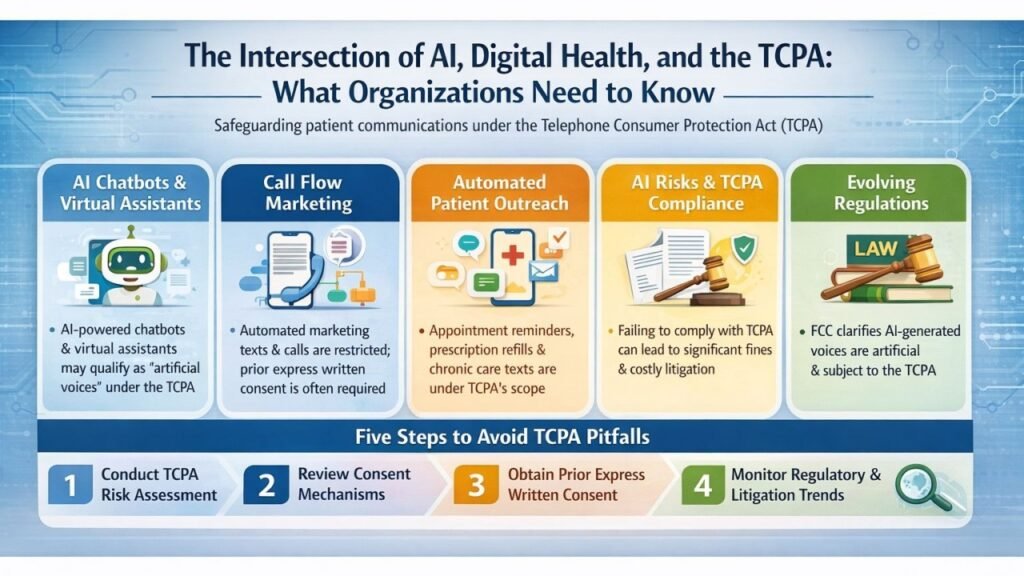
Why the TCPA Is Critical in an AI-Driven Digital Health Environment
Many digital health companies assume that compliance with the Health Insurance Portability and Accountability Act (HIPAA) is sufficient when communicating with patients. While HIPAA governs the privacy and security of protected health information, it does not regulate how or when patients may be contacted.
That responsibility largely falls under the TCPA, which protects consumers from unwanted or unauthorized calls and text messages. As AI enables large-scale, automated outreach, the TCPA has become a central compliance consideration for any organization communicating with patients via phone or SMS.
The TCPA restricts certain calls and text messages made using an automatic telephone dialing system (ATDS), as well as communications using prerecorded or artificial voices, unless appropriate consent has been obtained. In some cases—particularly for marketing-related communications—prior express written consent is required.
Importantly, even non-marketing messages such as appointment reminders, prescription refill notices, or wellness check-ins may fall within the TCPA’s scope if delivered through automated systems. While the TCPA provides limited exemptions for certain health care communications, these exemptions are narrow and highly technical, making reliance on them risky without careful legal analysis.
AI Chatbots and Virtual Assistants: Do They Qualify as “Artificial Voices”?
A growing area of legal scrutiny involves whether AI-powered voice bots and chatbots constitute an “artificial or prerecorded voice” under the TCPA. This issue has gained traction among regulators and plaintiffs alike.
In 2024, the Federal Communications Commission (FCC) clarified that AI-generated voices are considered artificial voices, meaning such communications are subject to the TCPA’s consent requirements. This ruling reinforced the application of the TCPA to emerging AI technologies.
However, questions remain—particularly around text-based chatbots that do not produce audible sound but still automate patient communication. Some plaintiffs argue that these systems should also fall under the TCPA because they replace live human interaction. Courts are still evaluating these arguments, and outcomes may vary by jurisdiction.
Additionally, while FCC guidance is influential, it does not eliminate judicial interpretation. Compounding the challenge, several states have enacted their own TCPA-style laws, some of which define automated technology more broadly than federal law.
What Digital Health Companies Should Be Doing Now
To mitigate TCPA risk in an AI-enabled environment, digital health organizations should take proactive steps:
1. Conduct a Comprehensive TCPA Risk Assessment
Evaluate all patient communication channels—including SMS, voice calls, and chat platforms—to identify where AI or automation is used. Assess whether these systems fall within the TCPA’s scope and consider applicable state laws.
2. Review and Strengthen Consent Mechanisms
Ensure that consent language clearly addresses TCPA requirements and is distinct from HIPAA authorizations. Marketing communications should be broadly defined, and consent should be properly documented.
3. When in Doubt, Prior Express Written Consent Is Best
Obtaining prior express written consent upfront can significantly reduce legal exposure, especially when deploying AI-driven engagement tools.
4. Stay Informed on Regulatory and Litigation Trends
The legal landscape surrounding AI and the TCPA continues to evolve. Ongoing monitoring of FCC guidance and court decisions is essential.
Final Thoughts:
AI is transforming how health care organizations connect with patients, offering opportunities for more efficient and personalized care. At the same time, automation can amplify legal risk if regulatory requirements are overlooked.
The TCPA remains a favored avenue for class-action litigation, and digital health companies should approach it with the same level of diligence as HIPAA compliance. Thoughtful consent design, careful contracting, and regular legal review can help organizations innovate responsibly—delivering smarter, scalable care while staying compliant.